MTF = ROI: How the DC-Air™ Direct Conversion Dental X-Ray Sensor Turns Clear Imaging Into Profit
- Jul 8
- 6 min read
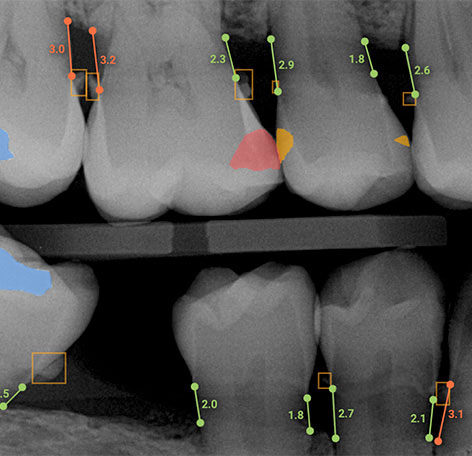
Picture the moment. You're reading a bitewing, and something on the interproximal catches your eye — a faint, fuzzy shadow. Is it real? Early demineralization? Or is it just the software's sharpening filter playing tricks? The margins are soft, so you can't be sure. And because you can't be sure, you reach for the line every dentist who reads a fuzzy X-ray has said a thousand times: "Let's keep an eye on it. We'll re-check it in six months.”
I've spent my career around this technology, and I'll be honest with you about what a “watch” actually is. It isn't caution. It isn't conservatism. It's an admission — a quiet one — that the image wasn't clear enough to make the call. And here's the part that matters for your practice: that uncertainty was never the dentist's fault. Traditional digital sensors build an image by bouncing light around and then leaning on software to clean up the mess. Soft in, sharpened out. You were making confident decisions on top of a blurry foundation.
So ask yourself a different question than the clinical one for a second. What happens to your bottom line when you take that uncertainty off the table? When you can see incipient decay with unfiltered, native clarity — the first time, every time?
The answer is simple, and it's the whole point of this post: image accuracy is directly tied to profitability. When you can see it early, you can treat it early. And in dentistry, early treatment is the most under-used profit center you already own.

Why MTF Is the Only Spec That Can't Be Faked
To understand how a sensor makes you money, you first have to understand why the traditional ones cost you cases.
For decades the industry has run on indirect conversion. An X-ray hits the sensor, a scintillator layer turns that energy into visible light, and the light travels through a fiber-optic glass plate before it's ever measured. Here's the problem, and it's physics, not opinion: light scatters. It spreads sideways on its way through the glass. That spread is blur, and it's built into the image before you ever see it. To make the picture look sharp, the software cranks the enhancement — and that's where you get halo artifacts and early lesions buried under digital noise.
The DC-Air™ throws that whole chain out. Using patented direct-conversion technology on a homogenous silicon chip, it captures X-ray photons and turns them straight into an electronic signal. No scintillator. No glass plate. No light scatter to correct for. What the X-ray writes is what you see.

That faithfulness is measured by MTF — Modulation Transfer Function. It's the objective, no-marketing-allowed standard for how much true detail a sensor actually preserves. The DC-Air™ delivers the highest MTF in its class: over 70% at 5 line pairs per millimeter.
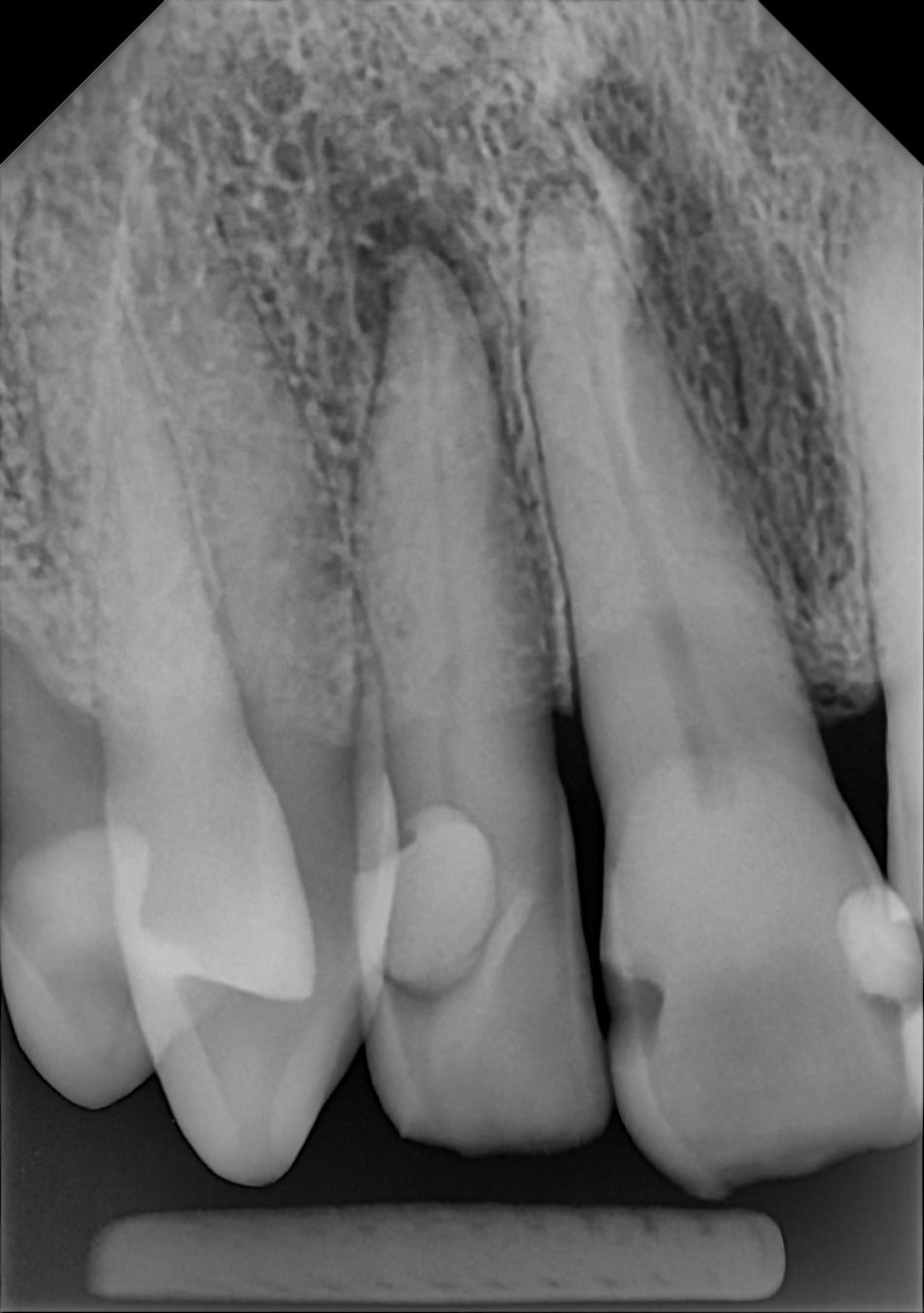
Here's what that means at the chair. When you zoom in on a DC-Air™ image, it doesn't fall apart into noise. The line between healthy enamel and a demineralized lesion stays sharp. You're not interpreting an artifact. You're seeing the diagnostic truth.

The Preventive Profit Center: See It Early, Treat It Early
This is the core of the ROI equation, so stay with me.
High MTF isn't a spec-sheet trophy. It's the engine of early intervention. When your images are natively clear, incipient decay jumps out at you — you stop guessing, and you stop “watching” a tooth quietly break down until it needs a big, invasive restoration.
“What I always hated about a regular digital sensor was that it didn't look like film — and I knew we were missing things. Now with the DC-Air it looks like film, and we're finding things we would have missed. It's a game changer.” — Dr. Scottville, DC-Air™ user
That clarity opens the door to minimally invasive, genuinely valuable preventive dentistry. When you can definitively see early demineralization — not suspect it, see it — you can act on it that same visit with a remineralization protocol (for example, resin-infiltration approaches like Curodont Repair) instead of sending the patient home to “wait and see.”
Think about what that changes. You're saving natural tooth structure. You're delivering proactive care the patient can literally see the reason for. You're producing preventive treatment on the same day instead of deferring it into a maybe. Do that even a couple of times a day, day after day, and the sensor pays for itself many times over — not through a single hero case, but through the small, honest wins you were previously letting walk out the door as a “watch.”


Comfort Is a Revenue Feature — Not a Nicety
You can't diagnose what you can't see. But you also can't treat a patient who dreads coming back because their last set of X-rays was miserable.
Traditional wired sensors are thick, hard-edged, and dragged around by a heavy cable that sets off gag reflexes and squirming. That discomfort isn't just unpleasant — it's a barrier to case acceptance and a drag on your schedule.
Take Sarah. She dreaded X-rays enough to rate them a 4 out of 5 for discomfort. When her office switched to the DC-Air™, it changed. Because direct conversion means no bulky internal glass, the sensor is exceptionally thin — just 5.2 to 5.4 mm. Pair that with the cord-free design and the Zero Profile™ Comfort Holder, and here's what she said: “Honestly? A 2. Way better. I barely noticed it in my mouth.”
Tom told the same story — a lifelong 4-out-of-5 dreader. After the wireless DC-Air™: “That was so much better — a 1 out of 5 at most. No wire, no digging. I could focus on the appointment instead of just surviving the X-rays.” He was impressed enough that he ended up investing $50,000 in the company behind it.
Comfortable patients are compliant patients. And when your hygienist isn't fighting a cable, she seats the sensor right the first time — fewer retakes, less radiation, a schedule that actually runs on time. That's production you keep.

The Quiet ROI: Cutting the Cord Cuts Your Repair Bill
Early treatment and higher case acceptance grow the top line. But the DC-Air™ also protects the bottom line by killing dentistry's most expensive failure point — the cable.
Industry data pins up to 90% of sensor failures on cable damage — biting, bending, tugging. When a wired sensor dies, you're not just paying for the repair (typically $1,000 to $3,000). You're eating operatory downtime on top of it.
The DC-Air™ severs the tether entirely. It transmits high-resolution images in seconds over secure Bluetooth® Low Energy. It's a rugged, homogenous silicon build with no fragile glass plate to shatter if it's dropped. And the internal battery captures 150+ radiographs on a charge — enough to outlast your busiest day. No cable means no recurring cable-repair nightmare, and a materially lower total cost of ownership over the life of the device.

Stop “Watching.” Start Growing.
The era of the blurry, filtered, “let's-keep-an-eye-on-it” X-ray is over. If you want to grow the practice, you need a tool that hands you objective, MTF-verified truth — not a soft image with the guesswork sharpened on top.
Dr. Matthew Henry shares his experience with the DC-Air™ and its role in his practice growth.
The DC-Air™ gives you the unfiltered clarity to confidently diagnose the early lesion, act on it the same day, keep your patients comfortable and loyal, and stop bleeding money on cable repairs. When you see it early, you treat it early. That's the real ROI of image accuracy.
Ready to see the unfiltered truth on your own patients? Put the DC-Air™ to the Zoom Test and watch what direct conversion does to a lesion you'd normally “watch.”
Book your live DC-Air™ demo — ask about current pricing and our summer demo program.